
Beyond the Plate: Our Culinary Journey on a Costa Brava Running Adventure

We are not just a running company! We’ve been saying this for years, and every one of our runners can tell you it’s true. And one of the biggest reasons? The food. Forget the high-concept tasting menus or fancy “bowl culture.” When you join us for a Costa Brava running adventure, or any of our trips, you’re getting more than just sustenance. You’re getting a deep dive into local culture, a gourmet experience woven into every step you run. Food, for us, is a map of migration, a record of resilience, and sometimes, the result of a perfectly timed sneeze.
I’ve learned this firsthand, countless times. My family and I, we’ve lived in Costa Rica and Morocco. Our kids know that what we cook at home here in Catalonia would never be the same as what we’d prepare in our Costa Rican kitchen, or a Berber tent. Local cuisine belongs in its place; it just doesn’t taste as good outside its home. Trust me, we’d never make platanos maduros in Spain! So, no matter which NomaTrails destination you pick, you’re in for a truly local culinary journey. We use running as a way to explore, as our ancestors did, really getting into the heart of a place.
Catalan Flavors: Running the Costa Brava Running Adventure
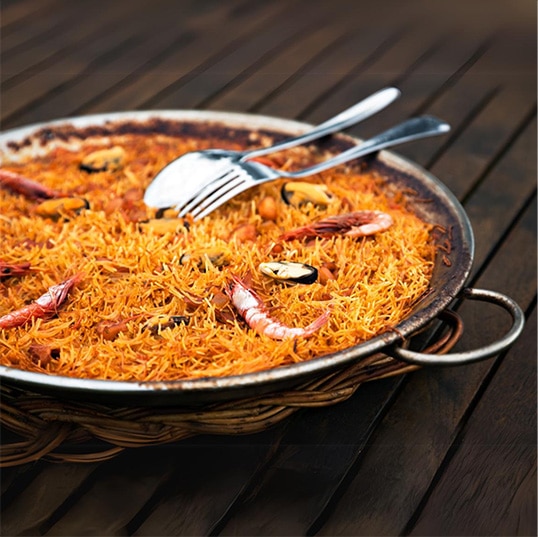
When we run in Spain, especially along the Costa Brava, we jump from one amazing spot to the next. You’ll quickly learn about the Mediterranean diet—those small, beautifully presented dishes. Think rice, grown right in the village where you’re eating it, or incredible gelatos and cakes made with fruits that are perfectly in season. And you’ll definitely learn our Catalan way with bread: pa amb tomàquet, bread rubbed with tomato, a drizzle of olive oil, and a pinch of salt. Simple, but it’s a staple.
Costa Brava Running Adventure: From Wild Trails to Human Towers
I remember one trip that was featured in Metro UK. Our host, Albert Diks, told us, “The Costa Brava has a bad reputation. People think of drunk Englishmen on beaches. People think it’s not beautiful. People run away.” But we, we did the opposite. We ran right into the heart of Catalonia. We were an 11-strong group, covering about 12 miles a day, logging 56 miles in total. And let me tell you, it was beautiful. Most people on the beaches? They were Catalan, and often, beautifully naked. That’s just how it is here.
My main instruction to everyone was, “Pack white trousers. And prepare for some surprises.” I’m a self-confessed running geek; I traded Costa Rica for the Costa Brava nine years ago, and these tours are my passion. Part businessman, part mountain goat, I’m always full of energy, ready for whatever the trail throws at us.
The tone for that week was set early, at Mas Cals, a 1,000-year-old farmhouse. “This is el porron,” I told everyone, waving around what looks like a big glass teapot with a long, sharp spout. “It’s how we traditionally drink local wine.” And yes, we were drinking it at 8:30 in the morning. No glasses, no contact with the spout. You pour red wine into your mouth from as far away as you can. By the time we hit the trail half an hour later, everyone was in incredibly good spirits. We ran through pines and cork trees, their lower halves stripped bare to plug those delicious bottles of Catalan wine. It’s an experience you just don’t forget.
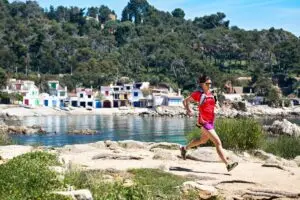
By midday, we’d hit sea level, running along a path above the glittering Mediterranean. We barely saw a soul, except for one remote beach where the sunbathers were almost entirely naked. One guy, playing a Spanish guitar and wearing just Ray-Bans, smiled and nodded as we passed. When someone asked me, “Pablo, how do you find these trails?” I just shrugged. “Often I go for long runs on my own. Sometimes the trails are there, made by wild boar, and I just make them bigger with my machete.” That’s the real trail running life here.
One of my favorite surprises for our runners is always a dinner at a place like Restaurant Casa Mar in Llafranc. It’s a Michelin-starred spot, and I swear, it’s one of the best meals you’ll ever eat. I’m talking cured sausage stuffed with foie gras, blue cheese, beef cheek, cantal cheese salad. We arrive in Girona on the last day with more Michelin stars digested than blisters accumulated. I’ll ask, “Do you have your white trousers?” Then I’ll lead the group through crowds of tourists towards the town hall, where one of Catalonia’s largest groups of Castellers, or human tower builders, is waiting for us. We’re handed blue shirts and red sashes, then thrown straight into their carefully mapped pile of bodies. It’s an unforgettable, extraordinarily well-planned trip. As the tower is disassembled, I’ll grab a tray of beers. “What happens next?” someone always asks. I just grin: “It’s a surprise.”
The Culinary Alchemy of El Celler de Can Roca
Right here in Girona, we have something truly special. The three Roca brothers—Joan, Josep, and Jordi—at El Celler de Can Roca, they’ve taken molecular gastronomy and turned it into something almost surreal. This place, a three-Michelin-star sanctuary, was ranked the #1 restaurant in the world not once, but twice ( and ). Dining there isn’t just eating; it’s a sensory experiment. You sit down, and on the table, you’ll see three stones. They represent the brothers’ trinity: savory, wine, and pastry expertise, all united.
The Rocas are masters of the ephemeral. They use laboratory tools to evoke memories through scent. Can you believe they’ve distilled the essence of high-end perfumes like Calvin Klein’s Eternity and DKNY into edible art? It’s a bold statement of Spanish innovation, freezing calamari with liquid nitrogen into delicate crackers, or serving caramelized olives hanging from a bonsai tree. They even created a fragrance, Nuvol de Llimona, based on a lemon dessert, misting it over diners. It truly bridges the gap between what you smell and what you taste.
Girona’s Sweet Secret: The Legendary Xuixo
But not all our culinary treasures are Michelin-starred. Take Girona’s most famous pastry, the Xuixo. It’s a deep-fried, sugar-coated delight, bursting with silk-smooth pastry cream. Its story is pure Catalan folklore, full of humor. The legend goes that a trickster named Tarlà was hiding in a flour bag, trying to secretly visit a baker’s daughter he loved. He let out an ill-timed sneeze—”xuixo!”—and gave himself away. To save himself (and maybe win her hand), he offered the baker the secret recipe for this amazing sweet. A sneeze, a love story, and a delicacy. Only in Catalonia!
The Xuixo truly embodies the Catalan spirit: resourceful, humorous, and deeply traditional. Every year during the Temps de Flors festival, you’ll still see a figure of Tarlà in the city center, a reminder of the trickster who turned a sneeze into a culinary hit. For the full local experience, you’ve got to pair a fresh Xuixo with a glass of ratafia, our regional herbal liqueur. It’s a taste of history, where a bit of cleverness is always the best ingredient.
Moroccan Mountain Meals
In Morocco, our food experiences are completely different. You won’t find fancy restaurants in the Atlas Mountains or the Sahara Desert. Instead, we eat in incredibly familiar places, often right in people’s homes. We see the woman who made the couscous we’re eating, or the freshly baked bread, still warm from the oven. It’s truly organic, truly ecological. They cook what they have; you won’t be eating fish in the mountains, for sure.
Morocco’s gastronomy is a blend of spices that might be new to you, but it’s excellent. The meat is fresh, the bread is hot, and the tea… ah, the tea! This will become your favorite drink, I promise. I remember waking up at 3 AM in the desert on one trip, running behind Abdu for two hours in the sand. We stopped, and he showed us the stars. You felt like you could see every single one. After two hours of running and walking, we were ready for the most beautiful sunrise. Those are the moments we chase, sharing a meal, a cup of tea, a sunrise with nomadic families. It’s not about the money; it’s about the connection. If you want to experience something like this, check out our Morocco running adventure.
Costa Rican Jungle Plates
When we’re running through the jungle in Costa Rica, we get extremely traditional meals. Everything comes straight from the soil—from the black beans to the coffee we drink. Once we hit the coast, we might go to some local restaurants, but they’re still not fancy, just the typical places where locals eat. In Costa Rica, you’ll eat a ton of delicious fresh fruit, and batidos, those amazing fruit shakes made with water or milk.
The “Married Man’s” Lunch: Costa Rica’s Iconic Casado
In the bustling sodas of Costa Rica—those small, local eateries where the smell of simmering black beans fills the air—there’s one dish that rules: the Casado. It’s a zero-waste “superfood bowl” that’s been around forever, long before that term was trendy. It’s a masterclass in getting all your nutrition in one go. You’ll always find white rice and beans, with fried plantains, a picadillo (a vegetable hash), and your choice of protein.
The name itself, “Casado,” means “married man,” and it’s got a great story from 1960s San José. Back then, laborers flocked to the capital, and they’d eat at these sodas. The cocineras, the women cooking, would joke that these hungry men, always asking for bigger portions and extra sides, were as demanding as their own “married men” back home. It also goes back to the banana-leaf-wrapped meals wives would pack for their husbands working in the fields. Today, the Casado is still the ultimate “plato ejecutivo”—a set lunch that comes with a homemade juice, usually under $4 at any local soda. It’s a perfect example of how survival food can become a beloved national dish.
A Runner’s Custom Casado
Costa Ricans are known for being particular about their food, but also very helpful. It’s common for someone to order a Casado and ask to personalize everything on the plate—from the type of picadillo to adding a fried egg—except for the main protein. It’s their plate, their way. I love how personal food can be there.
Sicilian Maritime Fusion: Pesto alla Trapanese
Pasquale, one of our guides, always talks about the running adventures in Sicily. We go from the sea, through rural areas, into mountain villages, and then back down. It’s a journey, and the food tells that story too. While most people know the green pesto genovese, the port of Trapani in Sicily offers something different, a “Red Pesto” that speaks of ancient trade routes and cultural blending.
Centuries ago, Genoese sailors would dock in Trapani and bring their agliata, a strong sauce made with garlic and walnuts. The Sicilian sailors, they loved the idea, but they looked to their own land. They swapped out the walnuts for local almonds and added the tomatoes that just burst with flavor under the Sicilian sun. The result? Pesto alla Trapanese—a lively mix of garlic, basil, almonds, pecorino Siciliano, and those amazing tomatoes. And any good culinary historian will tell you, this sauce has a soulmate: it’s traditionally served with busiate, a twisted, helical pasta that perfectly captures every bit of that textured sauce in its curls. It’s a beautiful example of how travel and migration routes create the best dishes, proving that the most lasting traditions are often born from fusion.
Roussillon: The Alchemist’s Wine of Patience
Just across the border from Catalonia, in the sun-drenched schist soils of Roussillon, France, there’s a wine secret that dates back centuries. It wasn’t a winemaker who found it, but an alchemist. In the 13th century, a physician and scholar named Arnaud de Villeneuve pioneered a process called mutage. He discovered that by adding a neutral 96° wine-based eau-de-vie to fermenting grape must, he could “stop time.” This kills the yeast before it eats all the sugar, leaving a naturally sweet wine that’s incredibly stable and can age for a hundred years.
These “wines of patience” are a quiet rebellion against our modern, fast-paced world. They demand decades to reach their peak, slowly evolving into complex, rich elixirs. They’re a refined alternative to spirits, perfect for contemplation. Depending on how they’re aged, you’ll find three main profiles:
- Oxidative Reds
- (like Maury or Banyuls) These are heady, with deep notes of fig, cocoa, and sweet spices.
- Amber Whites
- (such as Rivesaltes ambré) Radiant and round, they offer aromas of honey and orange peel.
- Rancios
- Aged out in the open air, these “meditation wines” reveal intense, patinated notes of curry, walnut, and old wood. Truly something special.
Running Just to Get Hungry
So, yes, these are running trips, and you’ll be putting in plenty of miles each day. But I wouldn’t be surprised if you actually gain a pound or two. Given all the effort you put in, I think that’s more than fair, don’t you?
At the end of the week, when runners ask me to recommend a cookbook from the country, translated into English, to take back home, my answer is always the same: “Sorry, guys, but it won’t work. The food will never taste the same there as it does here. Don’t waste your time or money on that!” It’s not just the ingredients; it’s the air, the people, the sweat from the trails, the stories shared around the table. It’s the whole experience.
Our journey through these corners of the world shows that a great dish is never static. It’s a living record of how people adapt, how they laugh, and how they innovate. From the alchemical discoveries of a 13th-century doctor to the humor of a Catalan trickster, these recipes turn survival into an art form. So, next time you sit down to eat, really look at what’s in front of you. What hidden history, what migration, or what ancient magic might be sitting on your own table?