
Iceland Trail Running: Beyond the Postcard
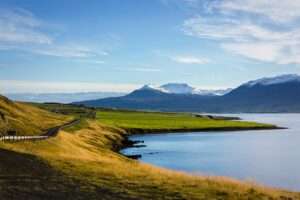
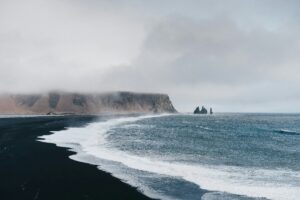
When you think about Iceland trail running, what comes to mind? Glaciers? Volcanoes? Stark, beautiful landscapes? For us at NomaTrails, it’s all that and so much more. It’s about finding a deep, raw connection with a place, not just ticking off kilometers. It’s about letting the land change you, just as it has changed us in places like Morocco or Sicily. We don’t just run anywhere, you see. We run where the land speaks to us, and Iceland, with its untamed spirit, whispers a compelling story. It’s a place where the earth is still writing its own history, where sulfurous plumes can mask the horizon, and where the silence of the glaciers is punctuated by the echoes of Viking settlers. To run and hike here is to move through a living museum of survival.
The NomaTrails Philosophy: Running to Connect, Not Just to Conquer
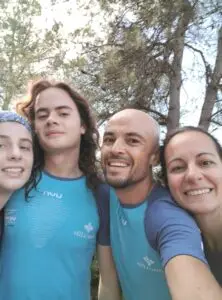
Look, we don’t just go anywhere. We don’t just “run the world” blindly. What we do, what my family and I have built, it’s about deep relationships. I always say, we only run in places where we have a profound connection. Where I can tell you, “This is my grandma’s village,” or “This is the school my kids went to.” If we don’t have that, it feels… fake, you know? Running for us is a means of transportation, pure and simple. It’s not about getting slim or improving your fitness level. It’s about exploration, like our ancestors did. Using our legs, our body, our lungs, our heart to traverse a territory, to see it in a way only runners can.
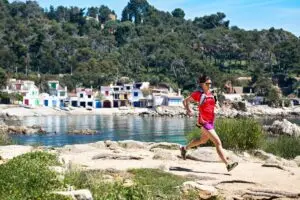
We’ve spent 12 years doing this in the Costa Brava, getting to know every corner, every person. We do it in Costa Rica, in Morocco, in Sicily. And an adventure like Iceland trail running fits perfectly with this vision. It’s about getting off the beaten path, going where the tour buses don’t, and truly seeing the soul of a place.
Beyond the Blue Lagoon: What Real Iceland Trail Running Reveals
Most travelers experience Iceland like a curated postcard. They soak in the milky-blue silica of the Blue Lagoon, watch the Strokkur geyser erupt with clockwork precision. Those are the “Greatest Hits,” and sure, they’re beautiful. But for us, they’re just the lobby of a much grander, wilder cathedral. Nearly 90% of visitors never push into the island’s true interior – the Highlands. That’s where the real Iceland, the Iceland of the Vikings, waits. It’s where the air is “sparkly clean and fresh,” and the weight of history is etched into every glacial valley.
We saw this so clearly with Tom Smith and his family. They traded the asphalt of the Ring Road for the rugged volcanic arteries of the Skogar region and the central highlands. They ventured into the “unfiltered” Iceland—a place where outlaws once sought refuge and where the most massive eruptions in human history once choked the global sky. That’s the kind of raw, unfiltered journey we’re always looking for.
Finding Peace at the Edge of the Map: The Westfjords
Imagine pushing into the Westfjords, that northwestern labyrinth of deep fjords and flat-topped mountains. There’s a psychological shift that happens out there. The coffee stops become sporadic, the roads empty out, and the whole landscape takes on this dramatic, intimate scale. It’s where you genuinely feel like you’ve reached the “edge of the world,” where the mountains fold in and the ocean somehow gets even bluer.
This isolation has kept the culture wonderfully low-key. In Hólmavík, for instance, you won’t find tourist traps. Instead, there’s the Museum of Icelandic Sorcery and Witchcraft, a visceral reminder of the region’s haunting past. Unlike the south, camping here often runs on a “turn-up-and-pay” system. It’s a trust-based approach that’s surprisingly freeing for someone like me, who sometimes over-plans. It lets you follow the weather, find a quiet spot, a “highland oasis” of peace, even in the middle of summer. That’s the kind of raw, human connection we chase with Iceland trail running.
Trekking Through Time: The Kjölur Route, Outlaws, and Pasquale’s Wisdom
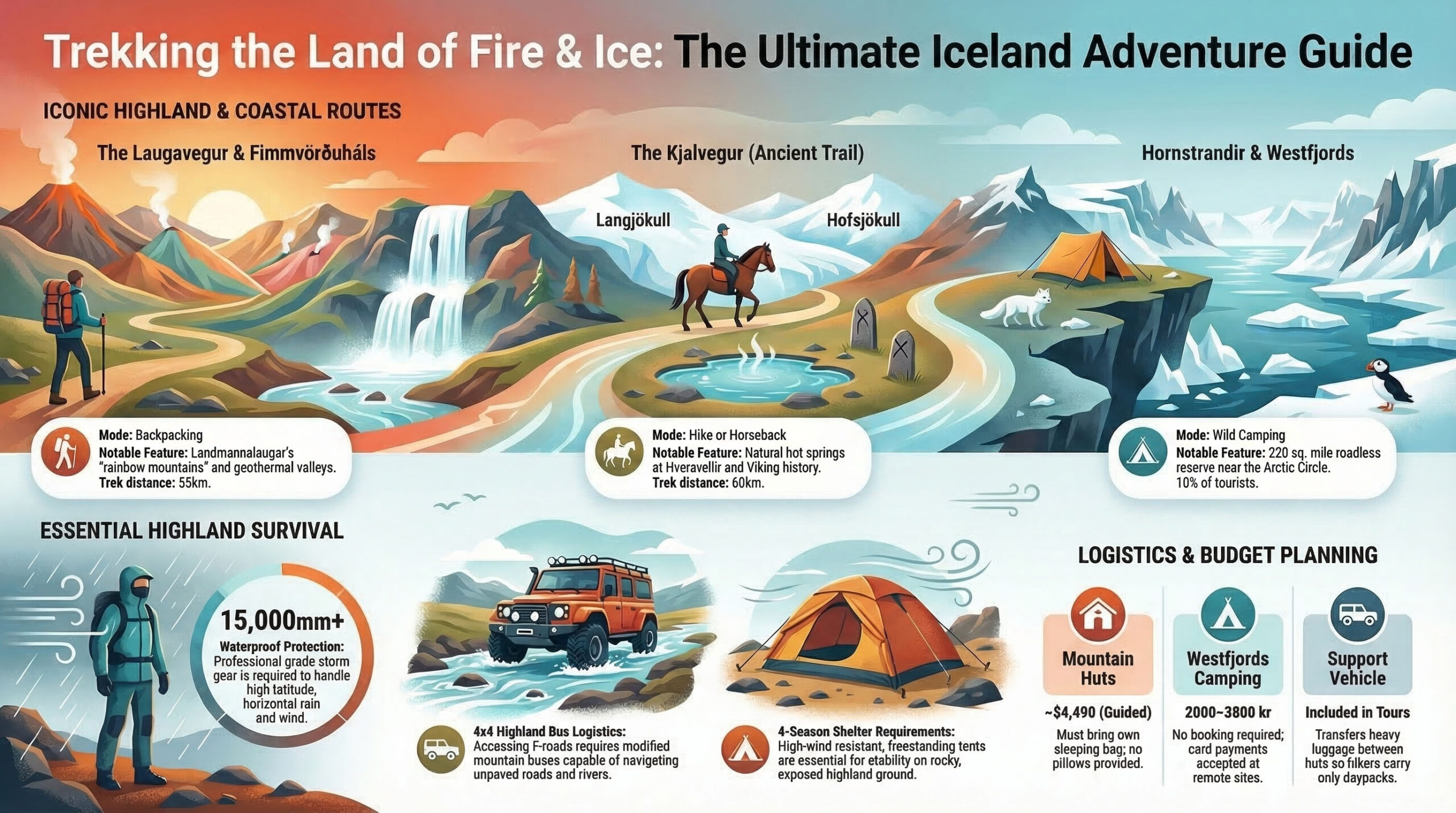
Then there’s the Kjölur route, or Kjalvegur. Pasquale, he always talks about traversing Sicily, moving from the sea, through internal, rural parts, past old villages, and up into the mountains. We climb, but not just to the peak. We move through its valleys, its “weak points,” as he calls them, then drop back down to the sea. Maybe we sleep in a village like Isnello, where you can see the ocean from your window, a tiny speck in the distance. The Kjölur route feels like that. It’s a “trek through time,” an ancient highway connecting north and south through a wild heart of obsidian and ice. To run here is to follow the same footpaths used by Viking settlers and outlaws for a millennium.
This trail is shrouded in myth. People say it’s haunted by trolls, elves, and ghosts. Historically, this unforgiving wilderness was a sanctuary for those banished from society, like the legendary outlaw Fjalla-Eyvindur, who survived 20 years in these barrens. As we’d move, we’d navigate past ancient stone cairns – those old Viking trail markers – between the mighty Langjökull and Hofsjökull glaciers. You could rest your feet in the Thverbrekknamúli hut, or find shelter at Hvitarnes hut, built in 1930. It stands there, protected by law, a testament to the sheer endurance needed to survive in what they called the “Valley of Thieves.” This is the kind of history you run through when you think about Iceland trail running.
The Outlaw’s Oasis: Hveravellir
Deep in the heart of this wild expanse lies Hveravellir, a geothermal site that served as a refuge for Iceland’s most famous fugitive, Fjalla-Eyvindur. He reportedly survived in these unforgiving lands for 20 years, utilizing the natural heat of the earth to endure the winters. The Smiths experienced the irony of this “outlaw’s oasis” firsthand, dining in a traditional turf house and soaking in the natural hot springs. Sitting where a banished man once fought for existence, surrounded by the same bubbling mud pools and steam vents, transformed a simple dinner into an immersive history lesson. It is a place where the line between a “geothermal paradise” and a survivalist’s stronghold completely blurs.
Gear Up for the Elements: Highland Non-Negotiables for Iceland Trail Running
In the Highlands, the weather doesn’t just happen; it attacks. I’ve seen enough wind and rain in other wild places to know that your standard 3-season gear, which might be fine in the Sierras or the Alps, often becomes a liability here. The wind is the main antagonist, often sustained at 30–40 MPH, turning rain into a horizontal assault. If we were camping out there, a “bomb-proof” 4-season tent, like a Hilleberg, would be absolutely non-negotiable. These things are built to withstand a Highland gale that would snap the poles of a lesser shelter.
And your shell? It needs to be professional-grade. We’re talking a hydrostatic head rating of at least 15,000–20,000 mm to handle those “sideways showers” that define the Icelandic interior. Believe me, you learn to respect the elements out there. Tom Smith noted that “waterproof” shoes were actually a liability in wet canyons; once submerged, they trap water like buckets. He prioritized drainage and lateral stability instead.
The ultimate challenge, however, is the fine-grained volcanic blow sand of the interior. Tom utilized the “Flashlight Test” to vet the family’s footwear: if direct light passes through the upper mesh, the sand will follow. However, an “insider” secret is the trade-off: true sand-resistance and high breathability are often mutually exclusive. In the highlands, it is better to err on the side of sand-blocking to avoid the time-consuming ritual of dumping out grit every hour.
- The “Houdini” Essential: Carry an ultralight windshell, like the Patagonia Houdini. It’s a non-negotiable layer against the “sparkly clean” but biting highland air, providing warmth during high-cadence activities without the bulk of a hardshell.
- Stability Over Cushioning: Avoid high-stack trail runners. Technical terrain and side-hilling require a lower center of gravity to manage the shifting volcanic scree.
- The Gaiter Shield: Pair sand-resistant shoes with lightweight gaiters to create a complete seal against the pervasive Icelandic dust.
- River Shoes: Closed-toe neoprene water shoes are mandatory. Those glacial rivers are numbing, and the beds are rocky. Sandals won’t cut it; they won’t protect your feet from the cold or the stones.
- Rain Protection: A high-quality waterproof shell and pants. Leave the poncho at home. In those Highland winds, a poncho just acts as a sail, offering no protection and potentially compromising your balance on narrow ridges.
The Fissure That Changed the Sky: Laki’s Legacy and Iceland Trail Running
As the Smith family traversed the highlands, they stood atop the site of a global catastrophe. In the summer of 1783, a 27-kilometer-long fissure erupted at Laki, releasing the largest volume of lava seen on Earth in the last millennium. Historical researcher Katrin Kleemann notes that the resulting “dry fog” and foul sulfuric odor settled over the northern hemisphere, creating blood-red sunsets that deeply puzzled the naturalists of the Enlightenment, who struggled to find “reasonable explanations” for the darkening skies.
The consequences were haunting: the eruption triggered a famine that killed one-fifth of Iceland’s population. For travelers like the Smiths, the insight is sobering—this wasn’t just local weather; the jet stream carried these toxic gases to Europe and beyond. With a statistical recurrence period of 200 to 500 years, Laki’s legacy is not just history; it is a ticking geological clock. To run through this landscape is to feel the immense power of the earth beneath your feet, a truly humbling experience.
The “Free Herd” Tradition: A True Equestrian Challenge
Sometimes, traversing a territory isn’t just about running. Imagine riding an Icelandic horse across the Kjölur route. It’s not just a trail ride; it’s an immersive historical experience. On these long-distance treks, riders participate in the “free herd” tradition, traveling with a large group of loose-running horses galloping alongside the caravan. It’s practical, too: by switching mounts throughout the day, the horses stay fresh and eager. For the rider, the experience is something else – “tölting” (that smooth, unique fourth gait of the Icelandic horse) for miles across sandy plains, surrounded by the thundering hooves of a free-running herd. This “true equestrian challenge” connects you directly to the “Kjölur spirit” of Viking-age travelers. It’s a powerful way to move through the land, just like Iceland trail running allows us to move.
The People’s Pool: Landmannalaugar’s Raw Beauty
While the Blue Lagoon gets all the press, Landmannalaugar – the “Pearl of the Highlands” – offers something else entirely: the Laugahraun, or “People’s Pool.” This natural hot spring sits right at the edge of a jagged lava field, formed back in 1477, fueled by the geothermal activity of Iceland’s second-largest geothermal zone. The landscape here is a “rainbow mountain” masterpiece. You’re surrounded by the Bláhnúkur (Blue Peak), a distinctive blue-tinted mountain, and the Brennisteinsalda (Sulfur Wave), whose slopes are painted in vivid reds, yellows, and greens by sulfur deposits. The “People’s Pool” remains free, no artificial structures, just a constant 36–40°C year-round. It’s a communal, ancient experience that demands respect. You use the wooden boardwalks to protect that fragile geothermal environment and the delicate banks of the spring. That’s the kind of authenticity we seek, whether it’s for Iceland trail running or any other adventure.
Hidden Waterfalls: Gljúfrabúi and Gluggafoss for the True Explorer
Even near the crowded south coast, secrets remain for those willing to look. While the masses gathered at Seljalandsfoss, the Smiths ventured a few minutes further to Gljúfrabúi (“the one who lives in the gorge”). Seeing this mystical fall requires wading directly into a narrow canyon, getting drenched by the mist as the water drizzles down moss-covered cliffs. It’s a private show, just for those who dare to get a little wet.
Further afield, they discovered Gluggafoss, or “Window Waterfall.” Geologically unique, the cliff here is composed of soft tuff rock. Over centuries, the water has carved literal “windows” into the stone, and the falls now spout through three distinct openings. This geological quirk makes Gluggafoss a true “insider” gem, often bypassed by those who fail to see the beauty in the softer, more malleable bones of the Icelandic landscape. These are the moments, these hidden treasures, that make Iceland trail running so special.
Moments That Change You: Lessons from Morocco and the Soul of Iceland Trail Running
Our trips aren’t just about the running; they’re about the moments in between. The human connections. I remember one time in Morocco, Abdu and I, we were running in the desert. Waking up at 3 AM, running for two hours in the sand, just us and the vastness. The dust, the quiet, the feeling of the sand underfoot. Then, we’d stop, and Abdu, he’d point out every single star. You’d feel like you were seeing them for the first time, not just dots, but worlds. And after all that, two hours of running, walking, just moving, you’re ready for the most beautiful sunrise you’ve ever witnessed. The sky just exploding with color. That’s the magic we chase, the kind of magic that Iceland trail running promises.
And then there are the people. In Morocco, we’d run for days, sometimes not knowing exactly where we were headed. We’d be in the middle of nowhere, five and a half hours in the opposite direction from where any tourist bus goes from Marrakech. And then, suddenly, we’d drop into this incredible valley. A place where people live like they did 500 years ago, completely disconnected from our century. We found this family there, a little girl, maybe 12 years old, with the most beautiful, open face. Our own kids, they’re little monsters sometimes, you know? But she just ran off, found some wood, made a fire for us. Immediately, they invited us for tea. You can’t plan for moments like that. Those are the stories. That’s the “time traveling” I talk about. Those are the experiences that an Iceland trail running journey would be built upon.
I’ve seen marriages saved, new families started, because of these trips. I’m telling you, people come back home changed. Be careful, okay? These aren’t just holidays. These are memories and stories you can tell your grandkids. They transform you. The true story of Iceland is “written in its landscapes,” just waiting for us to run through it, to feel its grit and history.
The Call of the Last Wilderness: Why Iceland Trail Running Awaits
So, why Iceland trail running? Because it offers that raw, untamed beauty. It’s a place where the earth itself feels alive, constantly shifting, breathing. It’s a place that demands exploration, that rewards those who are willing to go deeper than the surface. We’re not just looking for pretty views; we’re looking for the soul of the land, and the soul of the people who call it home. The silence there is broken only by the roar of a glacial river or the wind scouring a lava field. It’s profoundly wild.
If you’re the kind of person who thinks running point-to-point, discovering a new place every day, traversing an itinerary, exploring, then you’re one of us. You’re welcome to come. Whether it’s the familiar trails of Costa Brava, the ancient paths of Morocco, the sun-drenched hills of Sicily, or the wild, volcanic expanses of Iceland, the spirit is the same. It’s about the journey, the people, and the person you become along the way. Are you ready to trade the comfort of the tour bus for the raw reality of the Highlands? It demands meticulous preparation and a humble respect for the elements, but it offers the only thing the crowded coastlines cannot: a chance to stand at the edge of the map and see Iceland exactly as the Vikings did.
Want to learn more about our philosophy? Check out our About Us page. For a glimpse into our current adventures, explore our upcoming trips.
For more general information about Iceland’s unique geography, you can visit Wikipedia’s page on Icelandic geography. If you’re interested in the broader world of trail running, a good resource is the International Trail Running Association (ITRA).
You can also read more about the historical impact of the Laki eruption on Wikipedia’s Laki page, and delve into the fascinating history of Iceland’s outlaws and their survival in the Highlands via Iceland Travel’s blog on Icelandic outlaws.