
By Pablo Rodriguez, Nomatrails Guide
Hola, friends. Welcome.
If you’re here, you’re probably looking for some solid tips to start running. Maybe you’ve got a new pair of shoes sitting by the door, and you’re wondering if you have what it takes. Let me tell you something important. For us, running is not about getting faster or slimmer. We don’t care about that. We use running for what it was first meant for: as a way to move through the world. It’s a tool for exploration, a way to see things like our ancestors did. It’s how we connect with a place, with its people, and with ourselves.
I’ve been guiding people for 12 years, taking them through places I know like the back of my hand—the trails behind my home here on the Costa Brava, the mountains of Morocco. We only go to places where we have a deep relationship, where we can introduce you to our friends, to our family. Because otherwise, it would be fake, right?
But to see the world this way, you first need a body that can carry you and a mind that won’t quit. Here is my guide to starting your journey.
1. The Golden Rule: The “Conversational Pace”
The biggest mistake I see is people going out too hard, like it’s a race. They last ten minutes, their lungs burn, and they decide they hate running. That’s not the point.
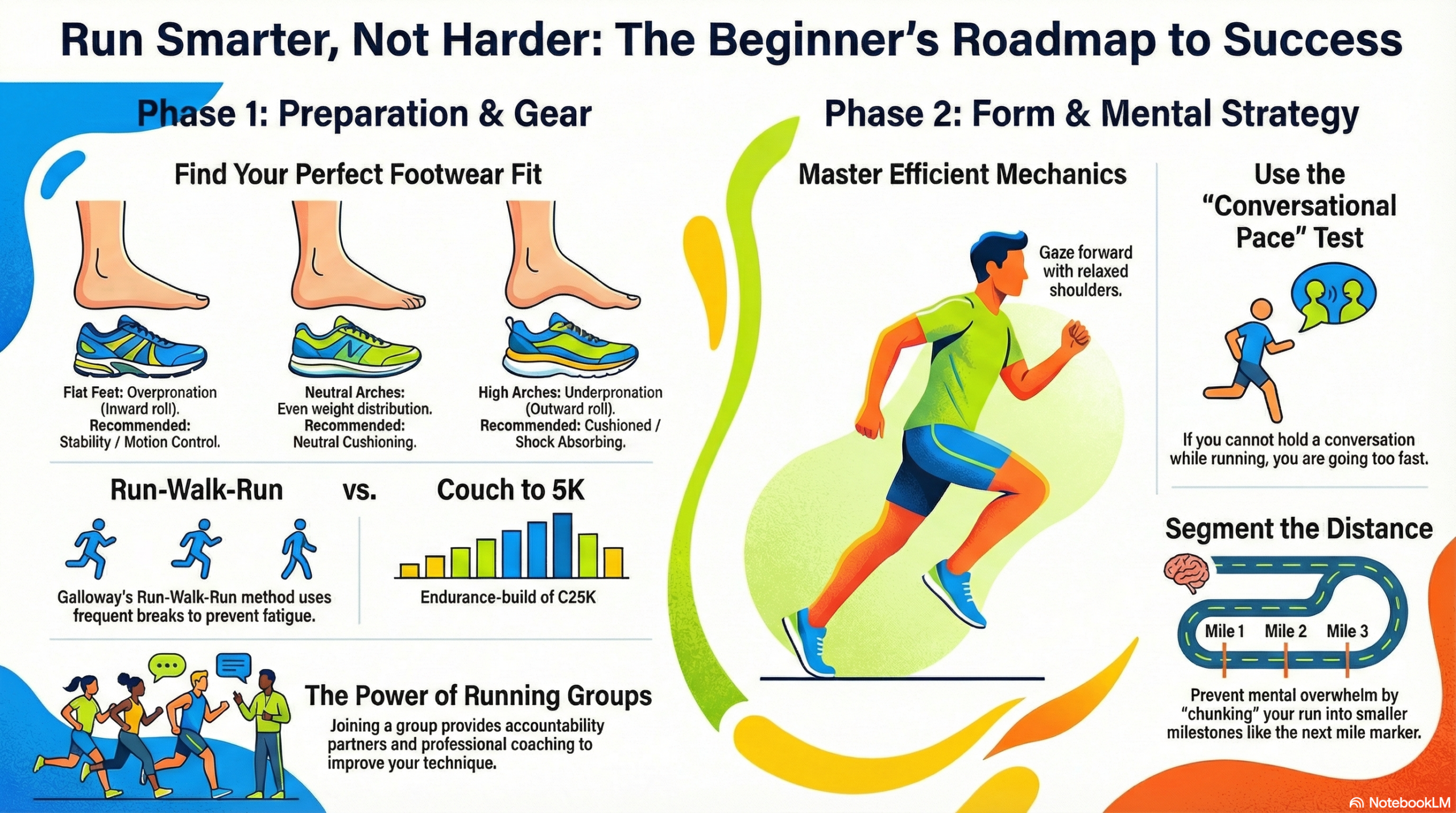
We use the Conversational Pace. If you can’t talk in full sentences, you are going too fast. It’s that simple. On our trips, the whole point is to share the experience. We’re running through valleys in Sicily, and Pasquale, our guide there, is telling us how we’re following the island’s ‘weak points’ from the sea to the mountains. If you’re gasping for air, you miss the whole story. Slow down. The goal isn’t to finish first; it’s to finish with a story to tell.
2. Strategy: Walk Breaks Are Not Failure
Let me be clear: even the best runners in the world walk. I’ve competed at a high level, and I still walk. It’s not weakness; it’s strategy.
Walking is a tool. It lets your body recover so you can go farther. I recommend the Run-Walk-Run method from the great Jeff Galloway. Maybe you run for 30 seconds, then walk for 30. This keeps you from getting exhausted and saves your joints. On a steep climb in the Atlas Mountains, we walk. It lets you catch your breath, sure, but it also lets you look up and see where you are. You see the immensity of the canyon, maybe you see a girl with her donkey working an irrigation channel, a scene from another time. If you’re only staring at your feet, you miss life.
“It doesn’t matter how much you run. What matters is why you run.”
3. Gear: Shoes are Medical Devices
Running is simple, I love that about it. But your shoes… your shoes are everything. They are the only thing between you and the ground. The wrong pair can end an adventure before it even starts.
Know Your Foot Type
Don’t just buy the shoe that looks cool. You need to understand your pronation—how your foot rolls when it lands.
-
- Neutral: Your foot rolls inward just the right amount. A Neutral Cushioning shoe is probably for you.
-
- Overpronation: Your foot rolls inward too much. This can mess with your knees. You need a Stability shoe.
-
- Underpronation (Supination): Your foot rolls to the outside. Look for a Cushioned shoe with more shock absorption.
Please, go to a specialty running store. Let them watch you run. It’s the best investment you can make in your running life.
4. Form: Run Tall, Run Light
Good form is your best protection against getting hurt. Think about being efficient, so you can keep going for hours, to see what’s over the next ridge.
-
- Head Up: Look at the horizon, not your shoes. It opens your lungs and keeps you straight.
-
- Relax Shoulders: Don’t carry tension up there. Keep them down and loose. Wasted energy.
-
- Short Strides: Don’t reach with your foot. Try to land with your feet underneath your body. More steps, but lighter steps.
5. The Build-Up: Respect the 10% Rule
I know the feeling. You get the running bug, and you want to do more and more. But please, be patient. Doing too much, too soon is the fastest way to get injured.
Follow the 10% Rule: don’t increase your total weekly distance by more than 10% from the week before. Your heart and lungs get strong fast. But your bones, your tendons… they take much longer to adapt. Our trips are traverses, built day by day. Your training should be the same. Patience is everything.
6. Warm Up & Recovery: Treat Your Body Like a Temple
On our trips, the day doesn’t end when the running stops. Recovery is part of the adventure.
Dynamic vs. Static Stretching
Before the Run (Dynamic): Never stretch a cold muscle. You need to move. Do things like “High Knees” or “Walking Lunges” to get the blood flowing.
After the Run (Static): Now you can hold stretches for 30-60 seconds. When your muscles are warm, focus on your calves, hamstrings, and quads. We do this together at the end of a long day, before we share a meal. It’s a ritual.
7. Nutrition: Fueling the Adventure
You can’t go anywhere without fuel. For us, carbohydrates are our friends. They give your muscles the energy they need.
-
- Daily Fuel: Get most of your calories from good carbs like oats, rice, and fruit. It’s not just about gels. It’s about the tagine we share in a Berber home, the fresh pasta in a Sicilian village. Real food for a real journey.
-
- Pre-Run: Have a good meal 2-4 hours before you run. If you run early in the morning, a banana is perfect about 30 minutes before you head out.
-
- Hydration: Drink water all day. If you wait until you feel thirsty, it’s already too late. According to the experts at Sports Dietitians Australia, even small levels of dehydration can hurt your performance.
8. The Mental Game: More Tips to Start Running Strong
Sooner or later, your brain will tell you to stop. We all hit that wall. This is where the real adventure begins.
I remember one time in Morocco. Waking up at 3 in the morning, running in the dark, in the sand, for two hours. Your legs are heavy, and you just want to stop. But then you look up. And you feel like you can see every single star in the universe. You know the sunrise is coming. That’s what you focus on. Not the two hours, just the next step. Then the next. You break the journey into small pieces. “Just get to that rock.” This is a technique called chunking. And it will get you through almost anything.
9. Find Your Tribe
Running alone is a beautiful thing. But running with others… that has a different power. It makes you show up. It makes you accountable.
This is why we created Nomatrails. We run as a small team. We wait for each other. We share the struggle, so we can share the joy. After a week of running together, of sharing meals, of being vulnerable… people change. I’ve seen it. Tears come to our eyes when we talk about the experiences we shared. I know couples whose marriages were saved on our trips. People who have had kids they say wouldn’t exist if they hadn’t come with us. These are stories that will change you. So be careful. You will go back home changed.
If running point to point, seeing a new place every day, and using your own two feet to get there… if you think that’s a good idea, you’re one of us. You’re welcome to come.
Ready to Run the World?
Start slow. Get the right shoes. Take the walk breaks. But please, just get out there. The world is waiting. And if you can run for a few miles, you are ready to join us for an adventure of a lifetime.
Pura Vida,
Pablo Rodriguez
Nomatrails Guide