
Trail running vacations blog
Tips about hydration in a running event.
Run The World Adventures – Running CostaBrava
In This Guide
Ready to Run?
Join our next trail running adventure in Costa Rica, Morocco, Sicily, or the Pyrenees.
The importance of properly hydrating yourself throughout training and competitions cannot be overstated. Additionally, poor nutrition can worsen performance by increasing fatigue, and dehydration, which is directly related to poor thermoregulation, can have deadly health effects.
Dehydration Warning Signs
Know the warning signals that you need to drink more water.
Thirst
Being worn out or sluggish
Dry mouth
“Weigh yourself before and after a lengthy run, without clothing. You’re in the hydration sweet spot if you’ve only lost 1 to 2 percent of your body weight. Try drinking a little bit more water throughout your lengthy runs if you’ve lost more than 2 to 3 percent of your body weight.” Petro Rossi, running coach
Hydration for road and trail, different?
Running on the street and running in the mountains during a running vacation are very different from one another, and today we’ll talk about a common mistake that many street runners make when transitioning to trail running. This mistake has to do with the hydration and nutrition strategy.
The body’s water makes up between 50 and 70 percent of our total body weight and performs numerous vital functions for our body, including temperature regulation, nutrition transport, the removal of metabolic waste products, joint lubrication, and nutrient absorption and digestion.
Running in trails is not only about the pace
It’s very common when running road races of any distance starting at 5 kilometers every 10 kilometers to complete marathons to base hydration and nutrition strategies on the number of kilometers covered. For instance, we know beforehand that there are water stations every two or five kilometers, and we will stop at those to drink water or other wholesome beverages. The same is true when talking about the geles. We say, “Well, I took the first genre at nine or ten kilometres of the race, and I’ll finish at that.”
How long is a mile in a trail run?
And the reason we believe this is because when we run street races, regardless of the pace at which we should carry one route or another, we all, more or less, know what that pace will be and can predict it with a certain level of exactness. In contrast, if we go to the mountains using the same strategies, it is something that, to be honest, is as much as a true time bomb that will explode at some point sooner rather than later.
Different estimates of hydration in the city and in the mountains, with regard to time and distance
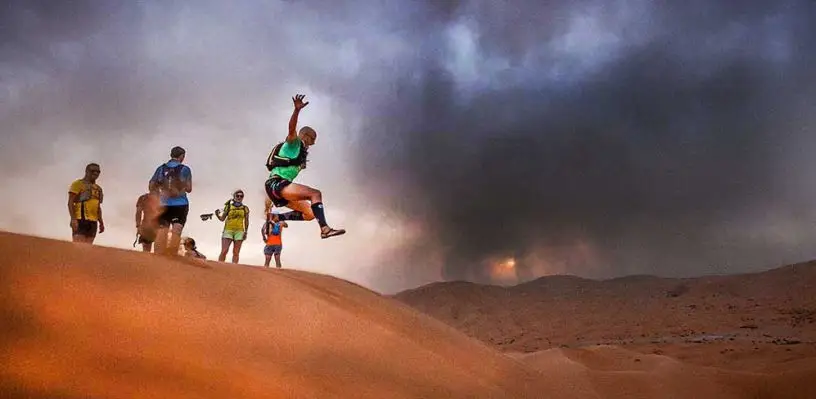
Nutrition is also important.
It would be suicide to propose eating a gel, for instance, every nine or ten kilometers or drinking water, for instance, every two or five kilometers. To further understand the importance of this, read on. For example, we might say that we can complete a kilometer in a flat manner in four minutes, thirty other kilometers, and in a plan, we can do so in five minutes, five minutes 20, or thirty.
Because of this, my personal advice is to always carry hydration supplies with you, such as these bags, hand-held water bottles, and wristbands. This is in addition to the fact that some race organizers may not list these items as necessities, but I still advise carrying them anyway to avoid depending on the possibility that, say, something goes wrong during one particular leg of the journey and you arrive at your destination later than expected.
OTHER FACTORS
Some important ideas about hydration in a running tour.
- The thermoregulation is the most important of all of them for the resistance line, especially when running through hot environments.der.
- Dosification. If you do this, it’s more or less like leaving a plant in a jar with dry soil all week and giving it 7 liters of water at the end of the week; the results will be the same as if you dose that amount of water and drink two or three times a day. Hydration depends on both specific factors of each body and external factors, such as the location’s climate and the day you’re going to run.
- Amount. Depending on the athlete’s characteristics, the activity they engage in, and the environment they are in, they can range from 1’5-2 liters to 6-10 liters during long-duration race training.
Common Mistakes when hydrating
It takes more than just drinking water to stay hydrated, especially during the summer. At least 4 hours before your run, try to drink about 2-3 mL per pound of body weight. For a run longer than an hour, you should drink between 0.5 and 1 liters of a sports drink. Every runner sweats at a different rate, so there is no set amount of fluid that all runners should drink. Most runners lose about 1 gram of sodium per liter of sweat, so salt is a very important part of staying hydrated.
Add more salt to your dinner, or eat a handful of salted peanuts as a snack. Most Americans don’t get the recommended daily amounts of magnesium and potassium, which are 400 mg and 4,700 mg, respectively. Dehydration can make you slow in a race and even put your life in danger. A dark-colored urine or a slight headache may be the first sign of dehydration. As dehydration gets worse, you may feel a lot of thirst, painful muscle cramps, tiredness, and sometimes your heart rate may even slow down. The best way to make sure you get enough of these nutrients is to eat a diet that is well-balanced and full of fruits, vegetables, grains, and legumes.
Composition of the Isotonic Drinks
These drinks contain 6 to 8 grams of carbon dioxide hydrates per 100 milliliters, as well as various concentrations of minerals like sodium, chlorine, potassium, calcium, and magnesium.
More Adventure Stories
Uncategorized

Tips to start running
Want to become a runner? This is the best guide to start. Check out our trail running tips for beginners.
[email protected] 02/02/2026
Uncategorized
Why should you run in Costa Rica?
Why You Should Run in Costa Rica When most people think of Costa Rica, they picture relaxing on a beach with a cocktail. But if
[email protected] 30/01/2026
Uncategorized

Why a running vacation might break your life?
Some reasons why you should never join a running vacation.
Run The World Adventures – Running CostaBrava 07/11/2025
Uncategorized
Racing limits the true meaning of running.
Why do we run? Is running capable only to give us PR or there is something else about it?
Run The World Adventures – Running CostaBrava 03/11/2025

Uncategorized
Jane Lelean an inspirational success
“I don’t know what I’m doing here, I hate running, I can’t stand it, I don’t know how to enjoy it” We were all by
Run The World Adventures – Running CostaBrava 28/10/2025
Uncategorized
BLOG | Trail running adventures | Running expeditions
In our blog we write about trail running trips and how
they have transformed our life. A family of 7 living out of trail running vacation tours.
Run The World Adventures – Running CostaBrava 03/10/2025
Prev← Previous AdventureHow to find running trails
Next Adventure →Before trail running became a thing in the italian dolomitesNext
Ready for Your Next Trail Running Adventure?
Join Nomatrails for unforgettable 6-7 day trail running vacations in Costa Rica, Morocco, Sicily, the Pyrenees, and Costa Brava.
Accessibility Toolbar
close Toggle the visibility of the Accessibility Toolbar
keyboard Keyboard Navigation
visibility_off Disable Animations
nights_stay Contrast
format_size Increase Text
text_fields Decrease Text
font_download Readable Font
title Mark Titles
link Highlight Links & Buttons
- Powered with _favorite_Love by Codenroll
Find Your Next Trail Running Adventure
-
Seeking rainforest exploration? Discover our 2026 Running Retreats in Costa Rica or Download the Complete Costa Rica Itinerary.
-
Dreaming of atlas mountains adventures? Discover our 2026 Running Retreats in Morocco or Download the Complete Morocco Itinerary.