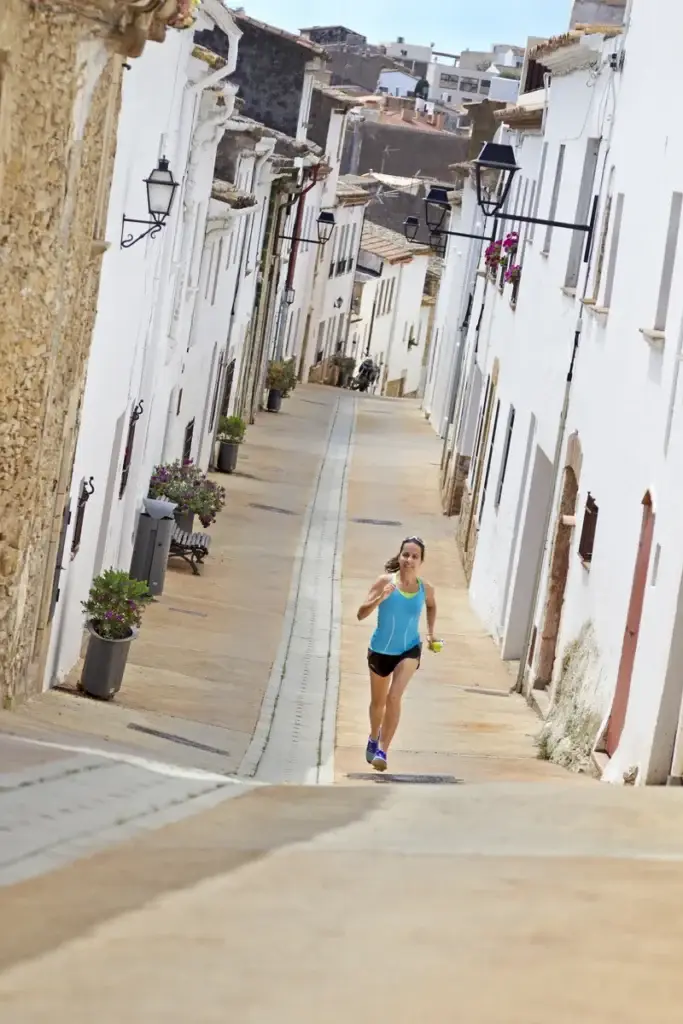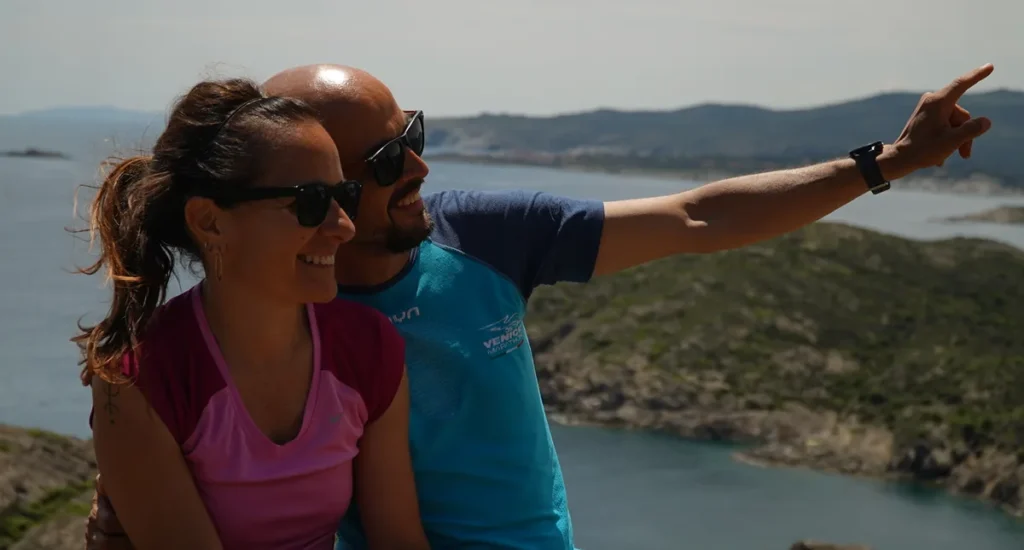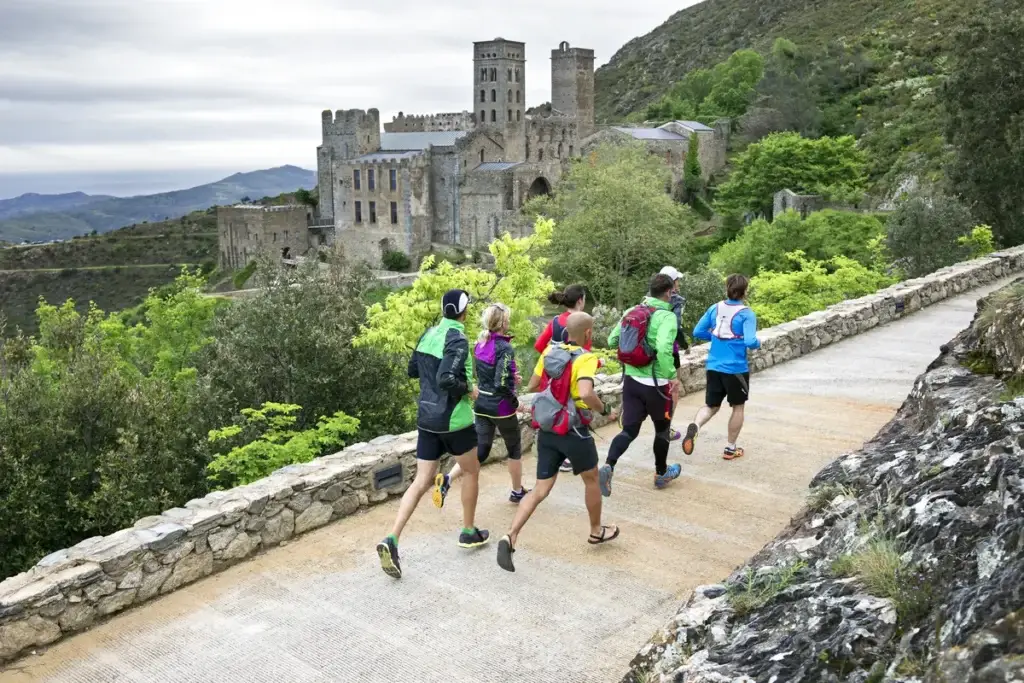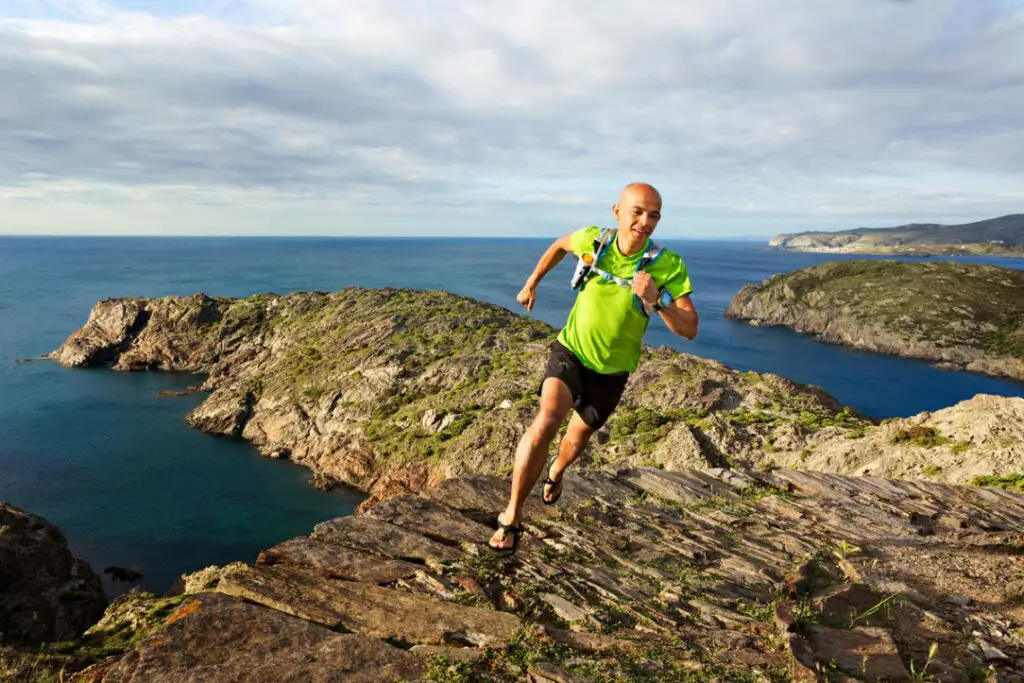

In October 2015, during one of our weeks on the Costa Brava, somebody sat Pablo on a bench with a clip microphone and asked him what running actually means to him. He talked for five minutes without notes.
Eleven years later almost nothing in the answer has changed, which is the reason we are putting it here. The trips have changed. The countries have changed. This has not.
If you would rather read than watch, these are the parts worth having. They are his own words, lightly tidied the way spoken English always needs.
The race he stopped running
He came to running through competition. He raced as a triathlete, and for years that was the whole of it — until one race changed what he thought he was doing out there.
“I have an experience in a race I did many years ago when I missed one of the most beautiful parts of the race because I was racing. And that taught me a lot.”
Everything that became this company is downstream of that sentence. If you are racing, you are not looking.
“It was supposed to be a business”
“It was supposed to be a business, or a way to live in. But for me this is absolutely different right now.”
He says it almost in passing, eleven years ago, about a company that was then five years old and is now sixteen. It has never stopped being true.
Running is not a sport
This is the claim he will defend at any dinner table, and he means it literally.
“Running is not really a sport. Because running is not something that you need to learn. Running is something that you do because you happen to be a human being.”
His argument is that of everything available to us, running is the thing closest to what we already are — not a skill you acquire but a capacity you switch back on. It is also, not incidentally, the most useful thing we have ever found for crossing a country on foot.
What it is actually for
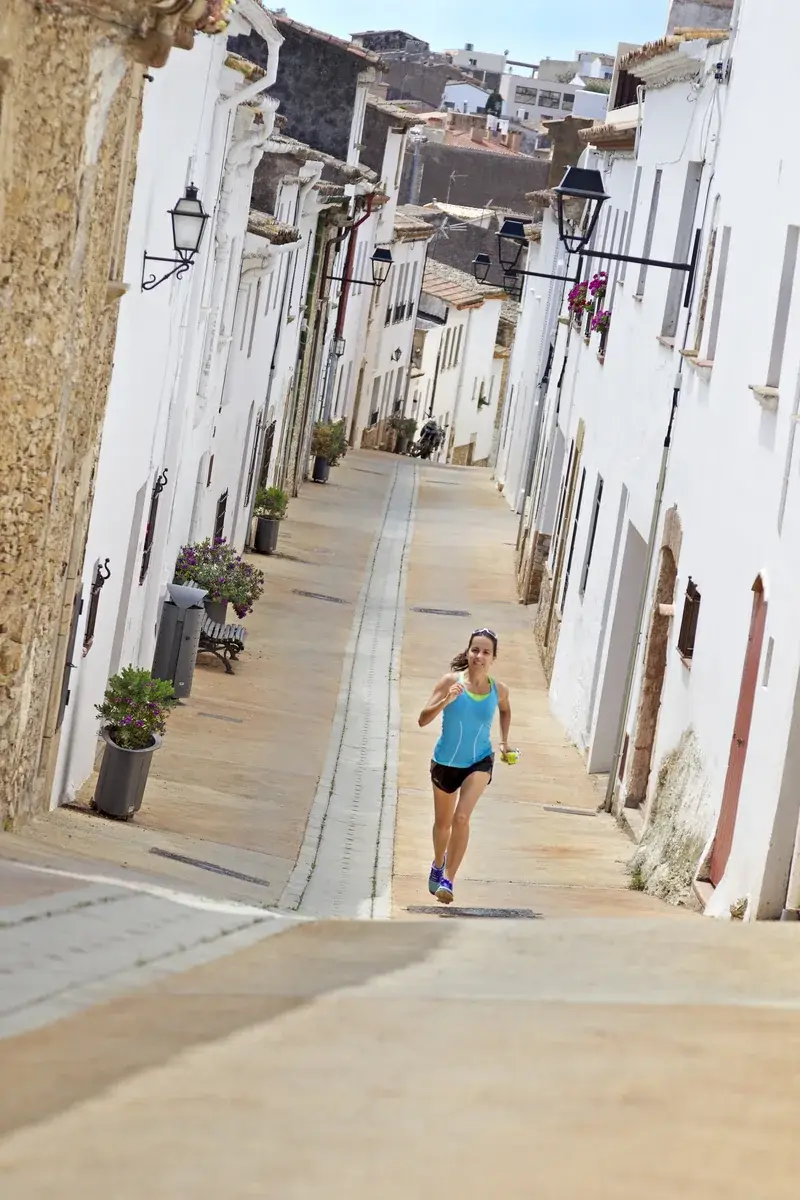
“The beauty of running has nothing to do with the performance, or speed, or best PR in your marathon or whatever. The beauty of it is to get to places and see things and travel and feel free.”
He did not arrive at that on his own. He is explicit in the film that he learned it from the runners he met — people who came as clients and left as friends, and who taught him more about running than any book did.
The part that surprises people
Asked what running does to a person, his answer is not about fitness.
“People who run more — there is more compassion to others. More humble. A better person. I have seen it many times, and it is just the perspective it gives you.”
And his favourite moment of the whole week
Not a summit. Not a finish.
“My favourite part about running the Costa Brava, I think it is probably the paella moment. It is weird, right? Sitting there with the beer and with the paella and everybody is happy.”
He goes on to describe the thing that happens on these weeks and cannot be scheduled: people met on the trail who tell you to sit down and eat with them, and then having to call ahead to the winery to say you will be late, because you are still at the table.
Eleven years on, that is still the most accurate description of a NomaTrails week anyone has given.
If you want the week he is describing
We run it in five places — the Costa Brava, the Pyrenees, Morocco, Sicily and Costa Rica. Every departure is on the calendar, the full range is on running tours, and if you want to know how any of this started, that is here.
Pablo and Cristina