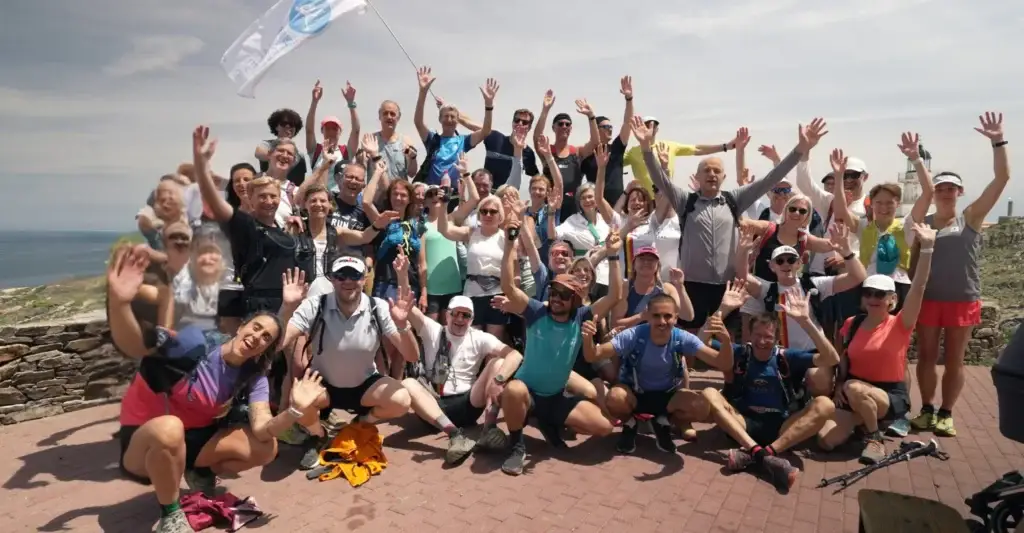

Earlier this month CrunchyTales published a piece Cristina wrote for them, answering the question women ask us more than any other: am I too old for trail running? The answer there was about permission — yes, you can, and here are the women who prove it.
This is the other half of that answer, and it is the more useful half. Not whether you can, but what the women who keep coming back to us actually do. We have guided every one of our weeks ourselves since 2010, which is sixteen years of watching the same people arrive, leave, and book again. Some of what follows surprised us. One part of it we got wrong for years.
They train for a terrain, not for a time
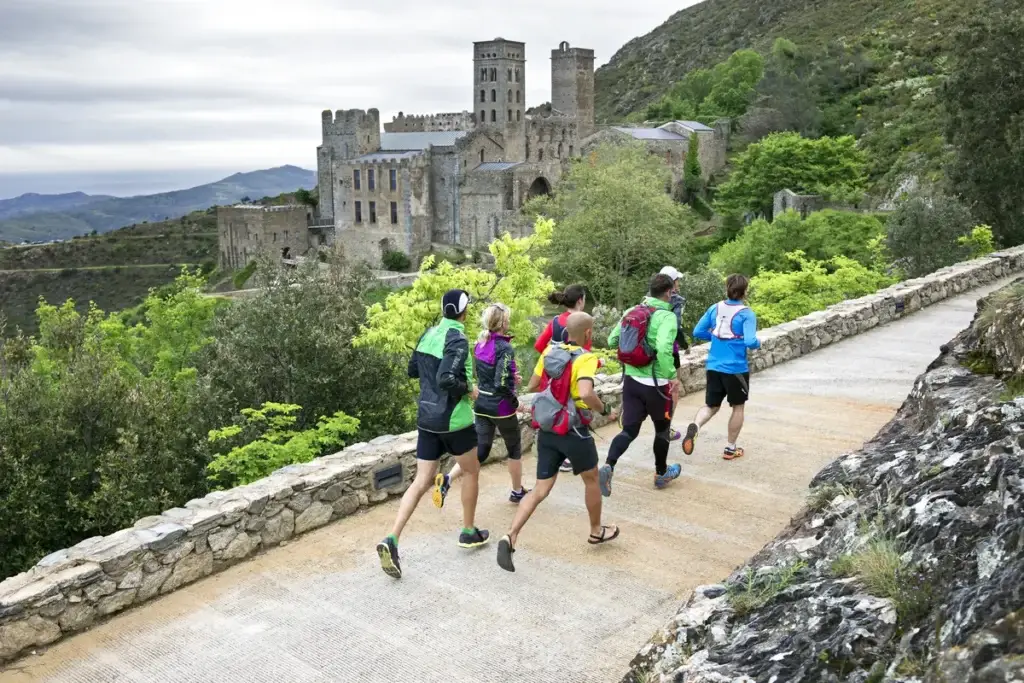
The runners who last are the ones who stopped asking how fast and started asking how rough. A trail week is seven days of uneven ground: roots, loose stone, a descent that punishes anyone who has only ever run on tarmac. The people who handle it best are not the quickest. They are the ones who have spent their training on surfaces that move under them, and who have practised walking on steep ground without feeling that walking is a failure.
Flat, fast mileage prepares you for a flat, fast race. It does not prepare you for day four.
They walk the uphills on purpose — and we were wrong about this
For a while in our early years we quoted a marathon time as a kind of entry standard. Cristina has said publicly that this was a mistake, and it was. It filtered for the wrong thing. It told strong, experienced hill walkers and steady runners that they were not welcome, while telling road runners with no descending skill that they were.
Walking the climbs is not a concession we make for older runners. It is what the whole group does, including us. The runners who arrive already comfortable with it have a far better week than the ones who spend three days learning to accept it.
They know their own pace and they defend it
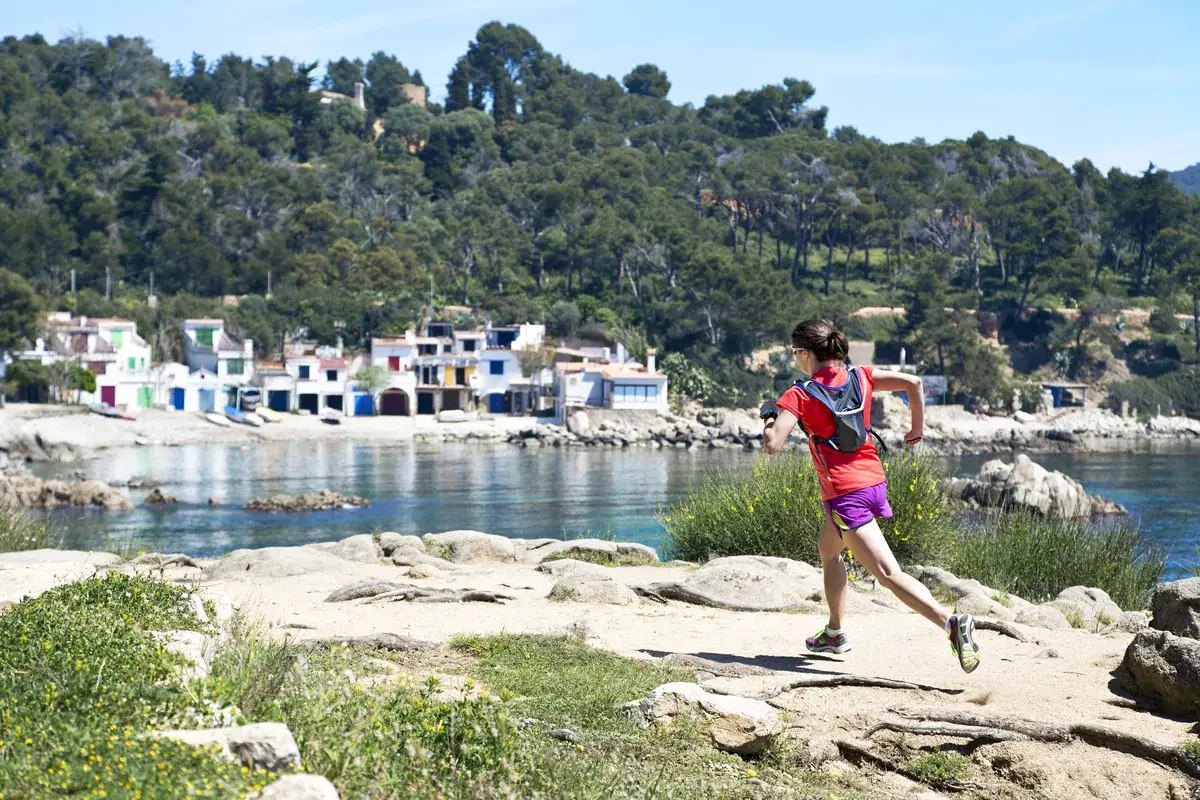
The most common reason someone holds back from a week like this is not fitness. It is the fear of being the one at the back. We took that seriously enough to open a separate departure at a gentler pace, because the honest answer to will I slow everyone down? should be a change to how we run the week, not a brave face.
The returners are almost always the people who settled into their own rhythm on day one and never borrowed anybody else’s.
They treat a setback as a timetable, not a verdict
We are guides, not doctors, and we will not pretend to give medical advice here. But sixteen years of groups has shown us one pattern clearly: the runners who are still running in their sixties and seventies are not the ones who were never injured. They are the ones who, when something broke, asked how long instead of whether.
J’ne is the clearest version of that we know. She broke an arm on Kilimanjaro. She broke a femur in a cycling accident. In 2018 she donated a kidney, and was back training about six weeks later. We are not holding that up as a template — most bodies would not forgive it and we would not ask anyone to try. But the question she asks after each one is always how long, and that question is the thing the long-lasting runners have in common.
Distance gets slower, not shorter
This is the one that changed how we think. We assumed people scale down the distance as the years pass. Mostly they do not. They scale down the speed and keep the distance.
Noël Relyea ran with us on the Costa Brava back in 2014. Years later, assuming she would long since have stopped, Pablo wrote to say hello. She wrote back:
“What fun to hear from you! … Bill and I also remember our runs with you very fondly. I wish we were still up to joining you now, but we do a much slower hiking pace. Although to celebrate my 80th birthday last year I did complete 2 marathons — one on trails in California and another on the road in Delaware. My preference is always for the trails and new places.”
Two marathons at eighty, at a hiking pace. That is the shape of it: the clock goes, the distance stays, and the preference for trails and new places never shifts at all.
Robie is a decade behind her on the same road. She turned fifty, ran a marathon a month for a year, crossed the Costa Rican jungle with us at fifty-one on a day that took nine hours in hard conditions, and is booked to run Sicily with us at sixty-one.

Anne Lyons came over from Ireland and turned sixty during her week in Morocco. She has eight grandchildren. Her fitness was comfortably above our average for the group, which is not a sentence most people expect to read about a grandmother of eight, and that is the whole point. Afterwards she wrote to us: “the trip will always be my best adventure and I’ve great memories.”
And on one of our Morocco crossings, eight of the women in the group were between fifty-nine and sixty-eight. Nobody arranged that. It is simply who signs up for a week of running across the Atlas.
Most of it is the table
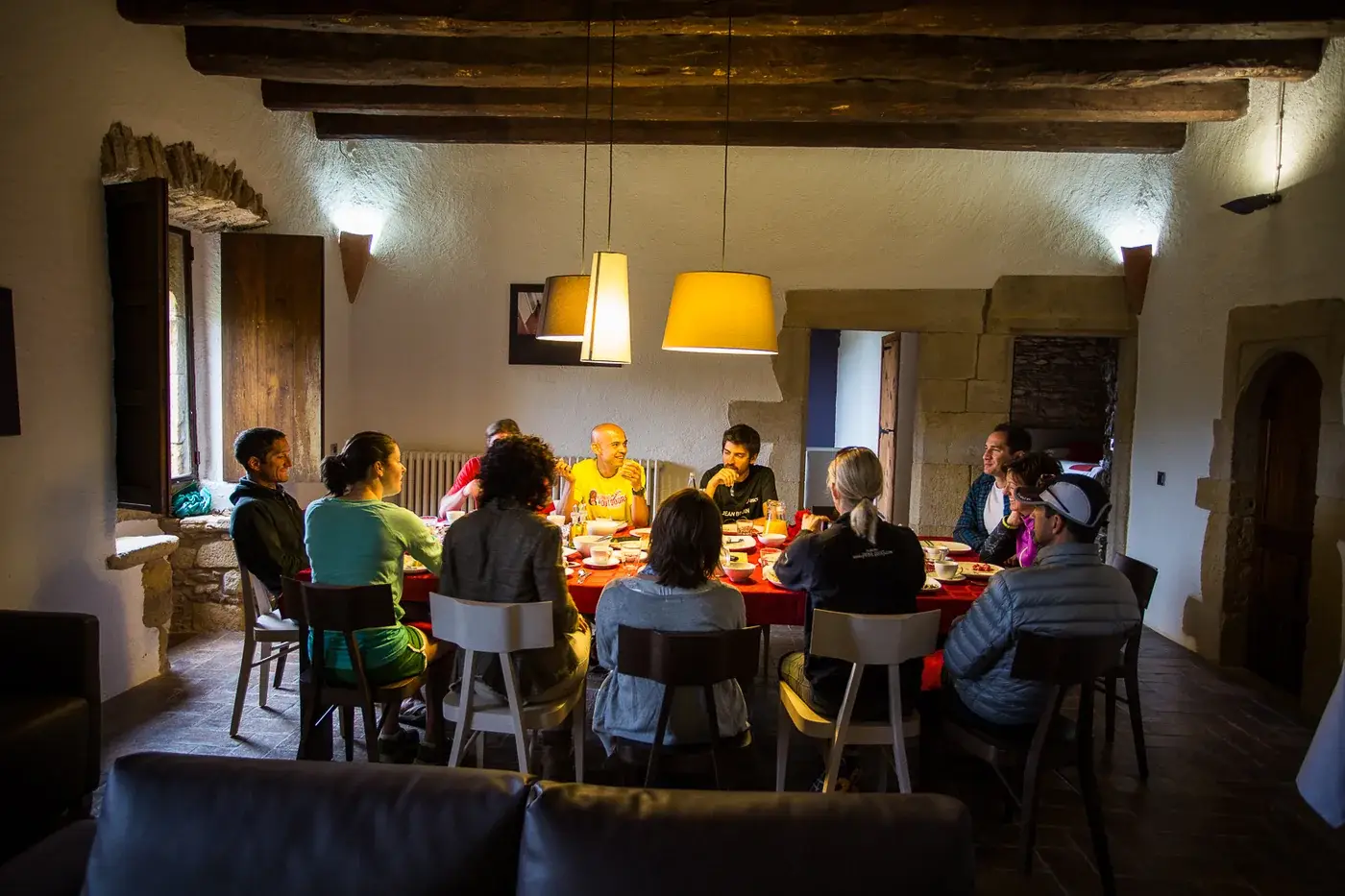
If we are honest about why people come back, it is not the trail. We have asked, and the answers are rarely about the running at all. They are about the evening: the dinner after the shower, the same faces for seven nights, the conversation that only exists between people who have been tired together all day.
Noël put it in one line, and we have never improved on it:
“The best friends are always people I have run with.”
That is the part you cannot train for and cannot buy separately, and it is why a guided week works for people who would never book a tour otherwise. You are not joining a tour. You are joining a table.
Hillary Allen was twenty-five when she ran with us in 2013, which makes her the exception in a post about running after fifty. She is here because of how she got there. She could not afford to come on her own, so she built the group around herself and filled it with people she knew. It was the last holiday she took as an amateur. So the table is not only the thing people come back for. Sometimes it is the reason the trip exists at all.
If you are weighing it up
Our weeks run in five places — the Costa Brava, the Pyrenees, Morocco, Sicily and Costa Rica — and every current departure is on the calendar. If you want the version of this written for women weighing up a first trail week after fifty, that is our page on trail running holidays over 50, and the full range is on running tours.
Or just write to us and say what you are unsure about. That is how nearly every one of these stories started.
Pablo and Cristina