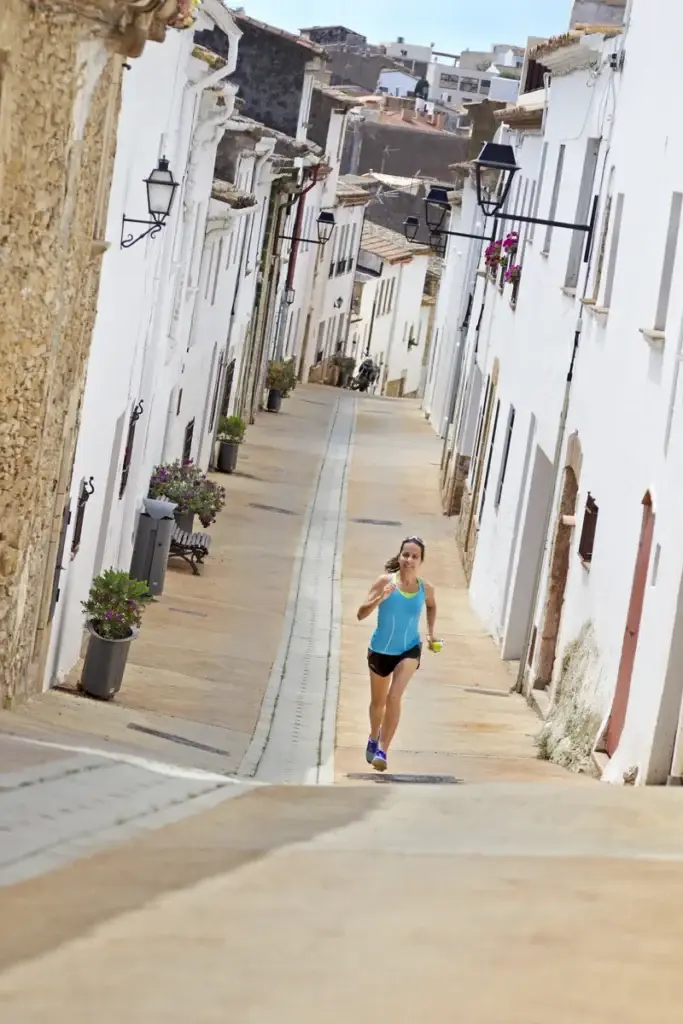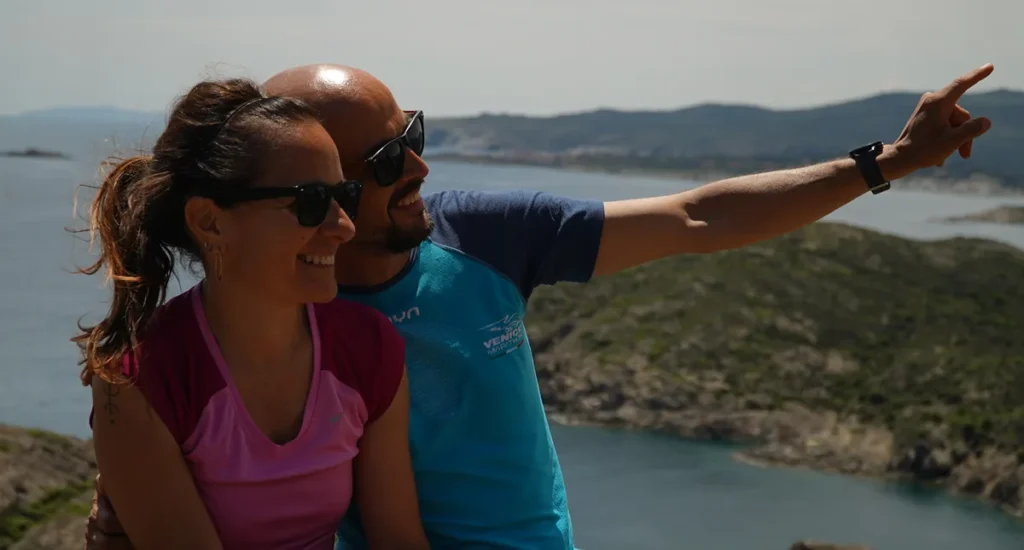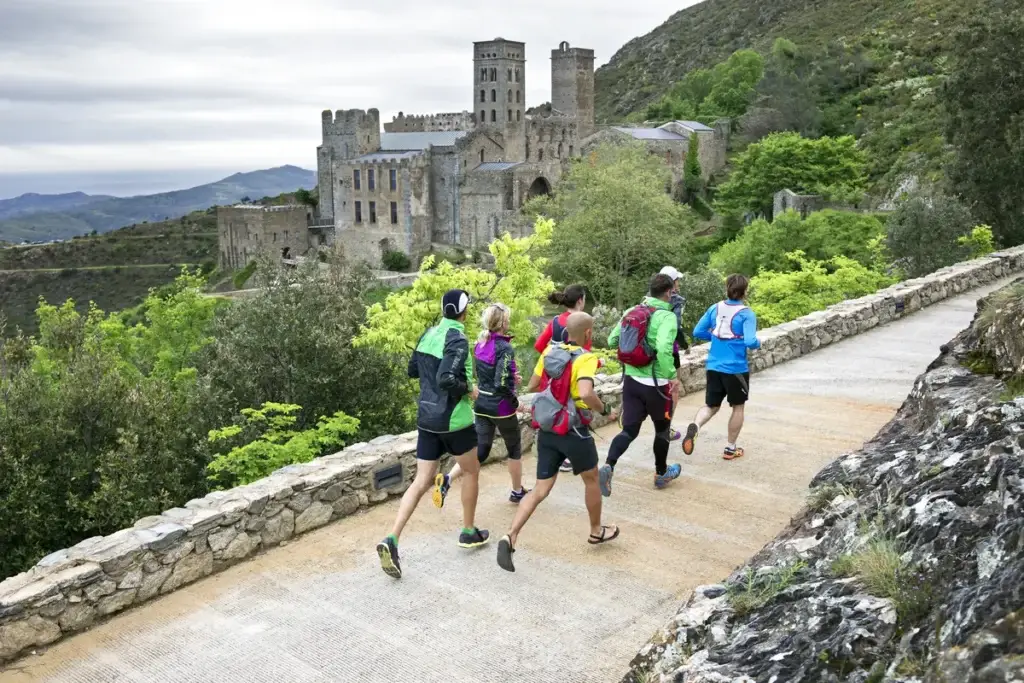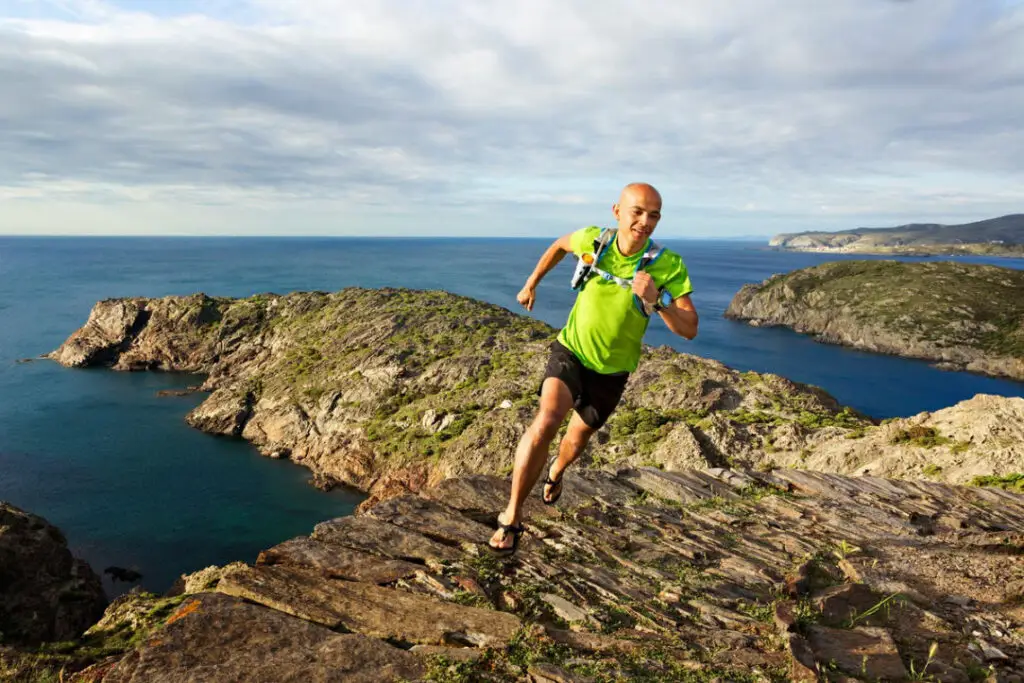

Most of our guests are between 45 and 60 — and several of our strongest runners ever have been over 60. If you are searching for trail running holidays for runners over 50, here is the honest guide we wish existed: what actually matters at this stage of a running life, and which trips fit.
For what the runners who keep coming back actually do — how they train, how they handle a setback, and why they return — see still running at sixty, seventy, eighty.
What matters after 50 (from sixteen years of guiding)
- Recovery built into the itinerary — big days followed by gentler ones, not seven summit days in a row.
- Support that removes risk — a crew that carries luggage, meets you at trail crossings, and can shorten any day.
- Pace honesty — groups small enough that the day flexes to the people in it, not the other way round.
- Comfort that earns its keep — real beds, long dinners, and no camping unless it is the point (one night under Sahara stars is the point).
The trips, matched honestly
1. Costa Brava, Spain — the ideal first one
Cove-to-cove running with swims and world-class Catalan food. Our most forgiving route: ~100–120 km across 7 days, endlessly adjustable. If you run 10–12 km comfortably, you are ready today.
2. Sicily, Italy — culture at running pace
Six days around Erice, the Zingaro reserve and the salt flats. Social pace, spectacular food, sea swims.
3. Morocco: Atlas to Sahara — the time-traveller
Berber villages, the most remote valley in the Atlas Mountains, and dunes at the end. Moderate days with full mule support — many of our over-50 guests call this their favourite week of any decade.
4. Pyrenees to the Med — the proud one
A real crossing: Canigó’s summit to a swim in the sea. For strong, consistent runners and fast hikers.
5. Costa Rica — the wild one
Our expedition level. Jungle heat, river crossings, homestays. Choose this if your engine is genuinely strong; age matters far less than consecutive-day endurance.
“Am I still fit enough?” — the only honest answer
Nobody can tell you from a blog post, which is why every booking starts with a free 30-minute fit call: we talk about your running as it is now and match (or veto) the trip honestly. That call is the whole difference between a holiday that stretches you and one that breaks you. Compare all five trail running tours or see the 2027 dates.
The honest training guide: 8 weeks to trip-ready after 50
You do not need to be fast. You need to be durable — able to move well on day four, not just day one. This is the plan we describe on fit calls when someone asks “what should I do between now and the trip?” It assumes you already run or hike a couple of times a week.
Weeks 1–2: establish the rhythm
- Three outings a week: two easy runs (40–60 min, conversational), one long walk-run (90 min, any pace).
- Twice a week, ten minutes of single-leg strength: step-ups, split squats, calf raises. After 50 this is not optional — it is where downhill confidence comes from.
Weeks 3–5: add terrain, not speed
- Move one run a week onto trails, dirt or grass — whatever is nearest. The goal is feet that adapt to uneven ground.
- Extend the weekend outing toward 2–2.5 hours, mixing running and purposeful hiking. Practise eating and drinking on the move; on our trips, long Catalan and Berber lunches do half the fuelling for you.
Weeks 6–7: back-to-back days
- The single best predictor of trip enjoyment: two consecutive days of 90+ minutes on foot. Do this twice. It teaches your body the recovery rhythm the itineraries are built around.
- If your trip has real climbing (Pyrenees, Morocco), find hills — or a stairwell. Uphill fast-hiking is a skill; everyone on our trips uses it, including the guides.
Week 8: taper and pack
- Halve everything. Arrive slightly under-trained and fresh rather than tired and “ready”.
What actually changes after 50 — and what doesn’t
Sixteen years of guiding has taught us more about masters running than any textbook. What changes: recovery takes longer (our itineraries alternate big and gentle days for exactly this reason), downhills cost more than uphills (poles are welcome on every trip; nobody blinks), and heat management deserves respect (why Costa Rica is our expedition level and Morocco runs in the mild months of March and November). What does not change: the engine. Aerobic endurance is the last thing to fade — several of our strongest guests ever have been in their sixties, quietly reeling in runners twenty years younger on the third climb of the day.
What runners over 50 say about these trips
“My son and I ran Costa Brava with Pablo. Each day was organised to perfection — and the food alone was worth the trip.” — Mark W., Costa Brava
“I did the Atlas to Sahara and had the best time of my life.” — Oxana C., Morocco
“A truly human adventure with some running thrown in — nothing like it.” — Ciaran C., Pyrenees
All from our ★5.0 Google profile — 26 reviews and counting, many from runners in exactly this age bracket.
Choosing by what you are protecting
Most over-50 runners we talk to are protecting one of three things. Knees: choose coastal routes with runnable gradients — Costa Brava or Sicily — and bring poles for the descents. Sleep and comfort: both coastal trips sleep in characterful hotels every night; Morocco adds one unforgettable night under Sahara stars, and the Pyrenees mixes guesthouses with one high refuge. Confidence in support: every trip runs with a crew — van on the coasts, mules in the Atlas, boat and 4×4 in Costa Rica — so an easier day is always available without drama.
Frequently asked, honestly answered
Is there an upper age limit?
No. There is a fitness conversation instead — the 30-minute fit call exists so neither of us guesses. We have guided runners into their late sixties; what matters is consecutive-day endurance, not your birth year.
Will I hold the group back?
This is the most common fear and the least founded. Groups are small, the pace flexes to the people in it, and the support crew means the route adapts — a shortcut here, a lift to lunch there. In sixteen years nobody has been left behind; it is not how we run.
What if I hike the climbs?
Everyone hikes the climbs. Fast-hiking uphill is proper mountain technique — our guides do it, elite trail racers do it, and you will too.
Can my faster (or slower) partner come?
Yes — mixed-pace couples and friend pairs are a fixture on these trips. The daily structure (regrouping points, long lunches, optional extensions) is designed for exactly that.
The gear that earns its place after 50
You do not need more kit than a thirty-year-old — you need the two or three items that protect the joints and the confidence. After sixteen years of watching what works on our trips, this is the short, honest list.
Poles: the single best purchase
Folding trail-running poles change everything on a multi-day trip. Uphill, they recruit the arms and take load off the legs, so you arrive at lunch with something left. Downhill — where knees over 50 feel every step — they act as a third and fourth point of contact and noticeably reduce braking force through the joint. Nobody on our trips raises an eyebrow at poles; half the group carries them, guides included. Learn the basic uphill push and downhill plant at home first: a fortnight of practice and they feel like an extension of your hands.
Shoes with a little more under the foot
This is not the decade for minimalist, low-stack racing shoes. A trail shoe with a moderate-to-generous cushion and a broad, stable platform absorbs repeated impact and forgives the tired, slightly sloppy footstrike of day four. Bring a pair you have already run at least 60–80 km in — a multi-day trip abroad is the worst possible place to break in new shoes. Pack a second pair if you have room; alternating dry shoes each morning is a small luxury that pays off after a wet day.
The rest, in one breath
Merino or synthetic socks (two-a-day if you blister), a soft flask or light vest so you drink little and often, sunscreen and a peaked cap for the exposed sections, and a light waterproof that actually packs down. Everything else your luggage transfer carries for you — one of the quiet privileges of a supported trip is that your daypack stays almost empty.
Recovery between the big days — the real skill after 50
The single physiological change that matters most in your fifties and sixties is not a smaller engine — endurance is remarkably durable — it is slower recovery. Muscle protein synthesis and glycogen replenishment take a little longer, which is precisely why our itineraries are built around alternating hard and gentle days rather than seven flat-out efforts in a row. Work with that design and you will surprise yourself; fight it and you will not.
Three habits do most of the work. Eat early and eat enough. The window in the first hour after a long day matters more now — the long, unhurried Catalan, Sicilian and Berber lunches and dinners on our trips are not just pleasure, they are refuelling built into the culture. Protect sleep. On a running holiday it is tempting to stay up late; the runners who feel strong on day five are usually the ones who quietly turned in early on day three. Move gently on the easy days. Active recovery — a relaxed walk-run, a swim in a cove or a mountain lake — clears the legs far better than sitting still. Every itinerary has these built in for a reason.
Hydration deserves its own line. Thirst signalling dulls with age, so drink to a schedule rather than to thirst, and on the hot trips add electrolytes — a pinch of salt in the flask does more than most expensive powders.
Heat, altitude and the things that catch people out
Most unpleasant surprises on a trip are environmental, not fitness-related, and they are entirely manageable once you know them.
Heat is the big one, and it is why we run Costa Rica as our expedition level and Morocco in the mild shoulder months of March and November rather than high summer. Thermoregulation becomes a little less efficient with age; the answers are simple — start days early, drink ahead of thirst, wear light colours and a cap, and use the shade and water stops the crew sets out. On the coastal trips the sea itself is the reward and the cooling system in one.
Altitude is gentle on our routes — the Atlas and Pyrenees high points are moderate and we gain height gradually — but if you live at sea level, respect the first big climb: go slower than feels necessary, eat and drink more than feels necessary, and it passes. Descents, not climbs, are what leave over-50 legs sore; this is where poles and a cushioned shoe repay their weight, and where letting the group regroup rather than charging ahead keeps the quads alive for tomorrow.
Eight weeks, in detail
The compressed version is above; here is the same plan with the specifics runners ask for on the fit call. Treat paces as “conversational” versus “working”, never as numbers on a watch.
| Week | Key session | Long day | Strength |
|---|---|---|---|
| 1-2 | 2 easy runs, 40-60 min, conversational | 90 min walk-run, any pace | 2 x 10 min single-leg (step-ups, split squats, calf raises) |
| 3 | 1 run moved onto trail/grass | 2 hr mixed run-hike | Add balance work: single-leg stands, eyes closed |
| 4-5 | 1 easy + 1 rolling-hill run | 2-2.5 hr, practise eating on the move | Progress to weighted step-ups |
| 6-7 | Back-to-back days: 90 min Sat + 90 min Sun | Repeat the back-to-back a second week | Downhill practice + poles drills |
| 8 | Halve everything – taper | One relaxed 60 min, then rest | Light mobility only |
If your trip has serious climbing — the Pyrenees crossing or Atlas to Sahara — swap one flat run each week for hills, or a stairwell if that is what you have. Uphill fast-hiking is a trainable skill and the single biggest confidence-builder for mountain days.
The three things people really want to ask on the fit call
“Am I too slow?” There is no pace requirement, only a durability one — can you move well on consecutive days. Groups are small and the day flexes to the people in it; on every trip there is a range of speeds and a regrouping rhythm built in. In sixteen years the slowest runner in the group has never been the unhappiest — usually the opposite.
“What if my body has one bad day?” Then you have an easy day. The support crew — a van on the coasts, mules in the Atlas, boat and 4×4 in Costa Rica — means any stage can be shortened or skipped without drama or judgement. A trip is a week, not a race; one gentle day protects the other six.
“Will I be the oldest one there?” Almost certainly not, and it would not matter if you were. Our typical guest is between 45 and 60, several every year are past 65, and the trails do not check identification. What binds a group is temperament, not birth year.
The next step, without commitment
Read the trip pages, then book the free 30-minute fit call. Tell Cristina your running as it actually is — the honest version, including the knee. You will get a straight answer about which trip fits, or a “not yet, and here is what to work on”. Both answers are wins. Compare all five trail running tours, or see every 2027 departure date.